
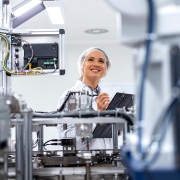
As industries continue to demand higher performance, safety, and sustainability standards, silicone rubber has become an essential material in advanced manufacturing environments.

Reliability in Harsh Conditions

Silicone rubber is designed to withstand extreme heat, cold, moisture, and environmental exposure. This reliability makes it suitable for applications in automotive engines, electronic enclosures, renewable energy systems, and heavy industrial equipment.

Supporting Advanced Manufacturing Technologies

With the rise of automation and precision manufacturing, materials must offer consistent quality and processing stability. Silicone rubber supports high-volume production through automated molding systems while maintaining tight tolerances and repeatable performance.

Sustainability and Long-Term Value

Silicone rubber’s long service life and resistance to degradation contribute to reduced maintenance and material waste. Its stability over time helps manufacturers create durable products that align with modern sustainability and quality goals.
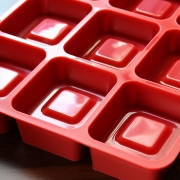

Standard materials often fail to meet the specific requirements of complex industrial applications. Custom silicone rubber solutions allow manufacturers to optimize product performance, reliability, and efficiency by tailoring material properties to real-world operating conditions.

Why Customization Matters

Every application has unique challenges, such as temperature extremes, mechanical stress, chemical exposure, or electrical requirements. Custom silicone formulations enable precise control over hardness, elasticity, conductivity, flame resistance, and durability, ensuring the material performs exactly as needed.

Custom Formulation and Processing

By adjusting base polymers, additives, fillers, and curing systems, silicone rubber can be engineered to deliver targeted performance. Custom processing methods such as extrusion, compression molding, injection molding, and foam expansion further enhance product functionality and consistency.

Benefits for Industrial Manufacturers

Custom silicone rubber solutions help reduce product failure rates, extend service life, and improve overall system performance. They also support design flexibility, allowing engineers to develop innovative components without compromising safety or reliability.

Silicone rubber is a high-performance elastomer widely used across industrial sectors due to its exceptional stability, flexibility, and resistance to extreme environments. Unlike conventional rubber materials, silicone rubber maintains its mechanical and chemical properties over a broad temperature range, making it a preferred material for demanding applications.

Key Properties of Silicone Rubber

Silicone rubber offers a unique combination of characteristics, including excellent thermal resistance, long-term elasticity, weather and UV stability, electrical insulation, and chemical inertness. These properties allow silicone rubber products to perform reliably in environments where heat, moisture, vibration, or electrical exposure are present.

Common Types of Silicone Rubber

Silicone rubber is available in several forms to meet different processing and performance requirements. High Consistency Rubber (HCR) is commonly used for molded and extruded products requiring strength and durability. Liquid Silicone Rubber (LSR) is ideal for precision molding and automated production, while Room Temperature Vulcanizing (RTV) silicone is often used for sealing, encapsulation, and on-site applications.

Industrial Applications

Due to its versatility, silicone rubber is widely applied in electronics, automotive components, industrial sealing, medical devices, energy systems, and consumer products. From gaskets and insulation materials to thermal management and protective coatings, silicone rubber plays a critical role in modern manufacturing.